
It is a truism that we’re experiencing the “Netflixification” of British politics. Gone are the days of four or five television channels tailored to mainstream audiences. Now we can choose to watch exactly what we like, whenever we want, algorithmically tuned to our tastes – and it’s the same with our choice of political party. This is smashing traditional loyalties, and breaking down the two-party tradition in England.
As I write, we don’t yet know the result of the Makerfield by-election, but there is perhaps no more vibrant a reflection of our pick ’n’ mix politics than this vote. There is a Labour candidate effectively running on a cult of personality to oust a Labour prime minister. There is an alliance of trader and tradie in Reform’s Nigel Farage-backed candidate, Robert Kenyon, who is a plumber. And there is a surge in people telling pollsters they will vote for Restore, the far-right alternative, which chiefly exists in the form of posts on Facebook and X.
All of this could reflect our brave new atomised world. But what it most resembles is a profound change in our consumption habits that came long before infinite scroll. The decline of the family grocer at the beginning of the Fifties saw shopkeeper-led, behind-the-counter stores replaced en masse with self-service supermarkets. In the space of a decade, the customer – back then, housewives – had to choose what products to buy rather than rely on the grocer doing it for her. Cue the arrival of TV adverts in 1955, discount coupons, saturated primary colours and sans serif – The Brand was born. “More than ever, the housewife had been ‘sold’ the brand before she entered the shop,” recalls an exhibit at London’s Museum of Brands, where a new exhibition, Branding Britain, studies the appeal of iconic British products.
Just as Kellogg’s Corn Flakes, McVitie’s Digestives and Typhoo Tea had to market loudly enough to be picked up off the shelf, our politicians and parties are having to make themselves ever more distinct, bold, even crass, to stand out in newsfeeds. We may have once been Margaret Thatcher’s “nation of shopkeepers”, but we are now a nation of shoppers – just as willing to switch political allegiance as we are to shop around for a better offer.

It’s been 20 years since the Tories last re-branded, swapping Thatcher’s flaming torch logo for the scribbly oak tree conjured by Mr Moderniser, Steve Hilton, who, it was said at the time, hadn’t worn a suit in a decade. (Hilton is now Donald Trump’s pick for California governor; this is a man who has never stopped re-branding.) And it’s been nearly three decades since Tony Blair’s Clause IV moment – ridding Labour of its socialist strictures and unbuttoning its collar. (The problem, of course, is going tie-free quickly makes you look less a man of the people and more one at ease in the professional managerial class.)
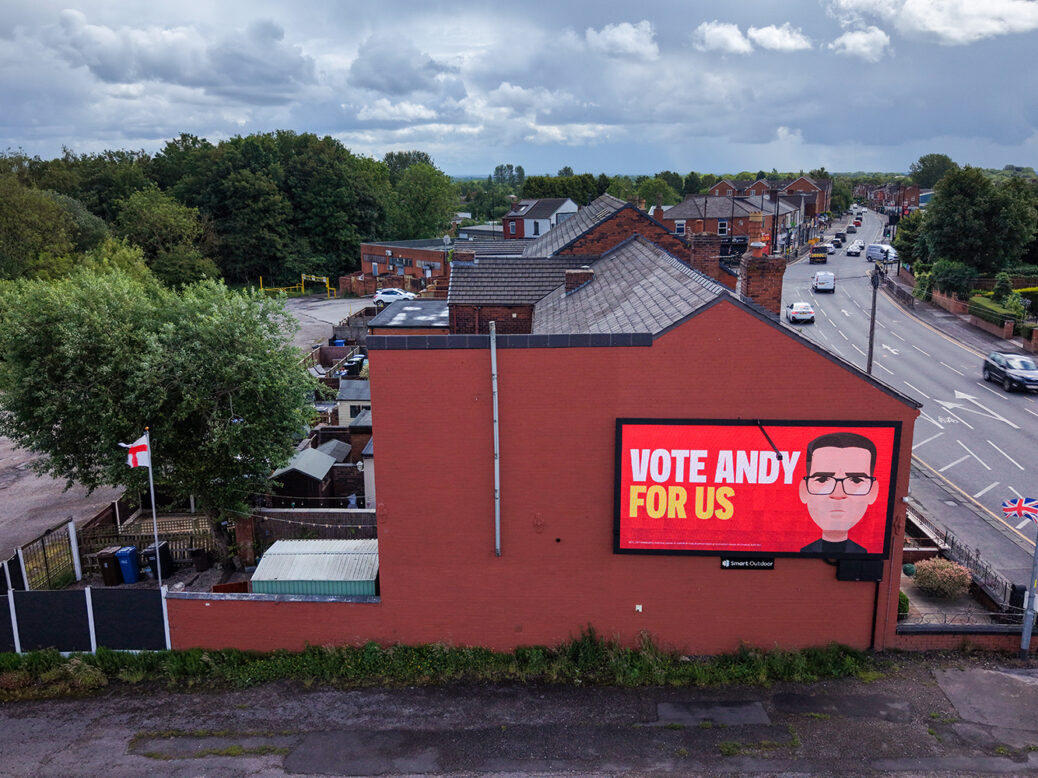
Now, brand is back. In his terrace-fashion-inspired menswear, five-a-side forays and gentle strum of the Smiths’ “Rusholme Ruffians” on a vintage Gretsch, Brand Burnham is perhaps the liveliest example of this. The “Northern Soul” badge beer mats and stylised pop art face on his campaign posters have created a visual vernacular that is instantly recognisable.
It’s an aesthetic shorthand that means most Brits think they know what kind of man Andy Burnham is – and whether they like that kind of man or not, it’s useful at least to know. He may not be everyone’s cup of gravy, but at least he represents a comfortingly familiar archetype: that of the cringey-cool centrist dad.
One cabinet minister, in a valiant attempt to defend the Prime Minister, pondered to me: “I just don’t know why the public is so against Keir – he’s not really a thing.” That may be why. Dreamed up ahead of the 2024 election, the “small-target strategy” to expose as little of his personality – and Labour’s character – as possible to avoid attack has backfired.
I remember a year or so after Labour took power, a polling expert told me the plan to cut winter fuel and disability benefits – as well as to blame the Tories for a £22bn black hole in the country’s finances – wasn’t working because it “goes against the grain of the Labour brand”. Even if you didn’t vote Labour, you still expected it to stay true to its heritage: helping struggling people through tough times, spending more on public services, caring.
And even if you remembered the economic damage of Liz Truss’s mini-Budget, the historical Tory brand of “fiscal prudence” meant it was more of a reach for voters to blame the Conservatives for budget shortfalls than, 15 years earlier, to blame Labour for the financial crash – a myth that suited David Cameron when he entered government in 2010.
Reform, too, has an unsubtle brand. There is a bit of retro English jollity and daytime-telly camp – Barbours and flat caps on the dog walk, sequinned catsuits on stage, giant novelty cheques and photos in front of 2p machines. The message is clear: we aren’t frightening; we’re normal and fun, if a little nostalgic.
It may seem naff to some audiences, but the idea – like Burnham – is to be both distinctive and somehow reassuringly recognisable. Following the chaos of Boris Johnson’s premiership, a consensus formed that we needed a period of “boring” leadership. This misunderstood what the Branding Britain exhibition concludes is the winning formula of our most successful and enduring brands, from Marmite to Vivienne Westwood’s tartan suits: “traditional, but with a twist”.
[Further reading: How Britain lost control]
Content from our partners

Related
This article appears in the 17 Jun 2026 issue of the New Statesman, The Race
Join the debate
Subscribe here to comment